
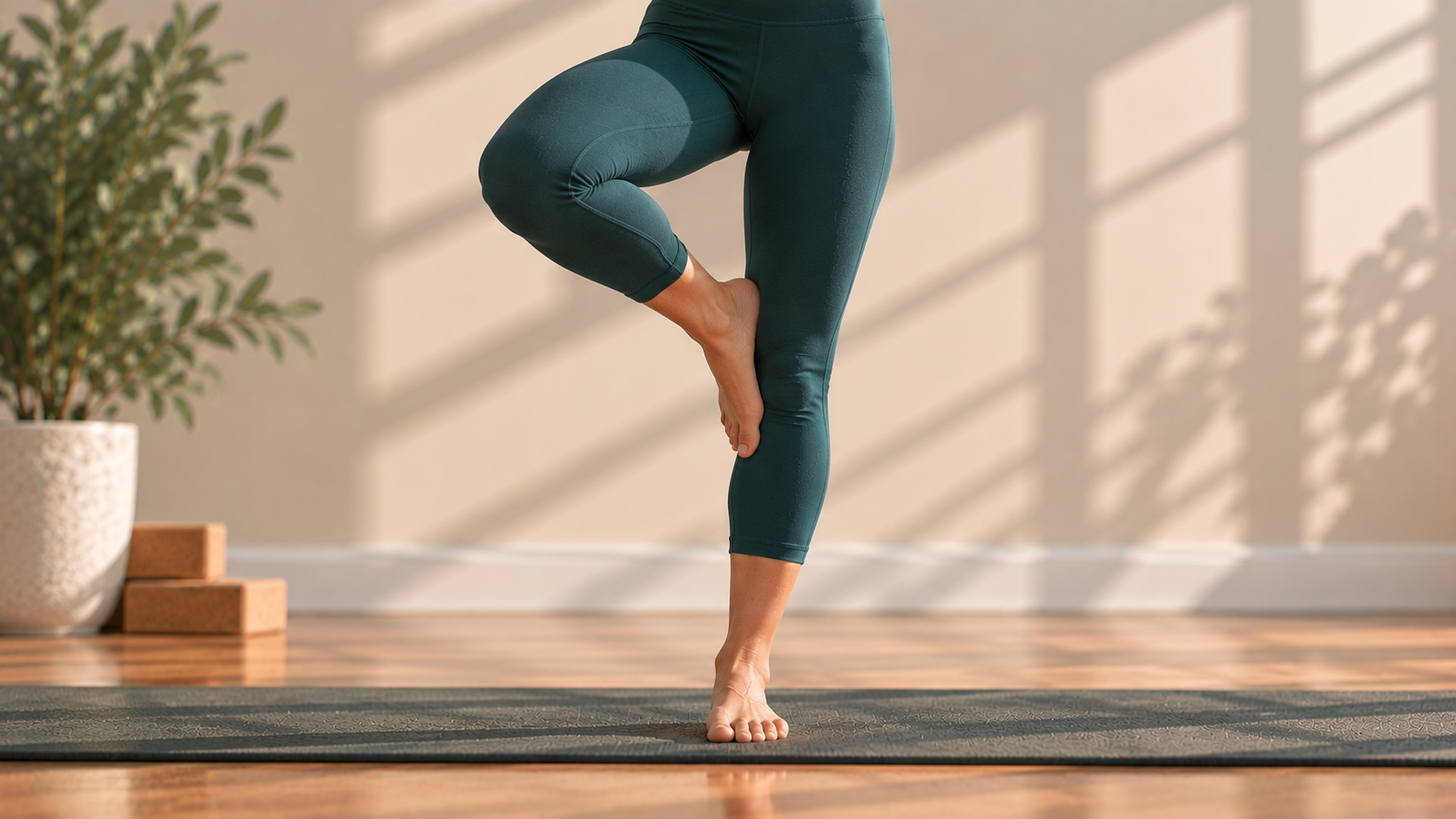
why you keep losing your balance
Understand Your Balance. Build Stability. Move with Confidence.
Ever wonder why you feel unsteady standing on one leg, struggle with certain movements, or find yourself losing your balance more often than you’d like?
Balance isn’t just something you have or don’t have. It’s a skill your body can develop through strength, coordination, and intentional movement.
Discover how to improve your balance with this approachable, Pilates-inspired workshop featuring practical exercises and easy-to-understand education.
6 Modules • 10 Balance Exercises • Downloadable Exercise Guide
Balance Is About More Than Standing Still.
You might notice it when you’re standing on one leg, stepping over an obstacle, walking on uneven ground, or trying to maintain control during an exercise. Sometimes, even the simplest movements can feel surprisingly challenging.
But balance isn’t just about having strong legs or being able to hold a position without wobbling. Your balance depends on several systems working together.
Your eyes, inner ears, muscles, and joints continuously communicate with your brain to help you understand where your body is and respond to changes in movement. When strength, coordination, or body awareness is challenged, maintaining stability can become more difficult.
That’s Where This Workshop Comes In.
Why You Keep Losing Your Balance helps you understand the factors that influence your balance and introduces practical, Pilates-inspired exercises to help you improve it.
Rather than focusing on complicated movements or advanced techniques, we’ll explore how small, intentional adjustments can help you develop a stronger foundation for stability.
Because improving your balance starts with understanding how your body works.
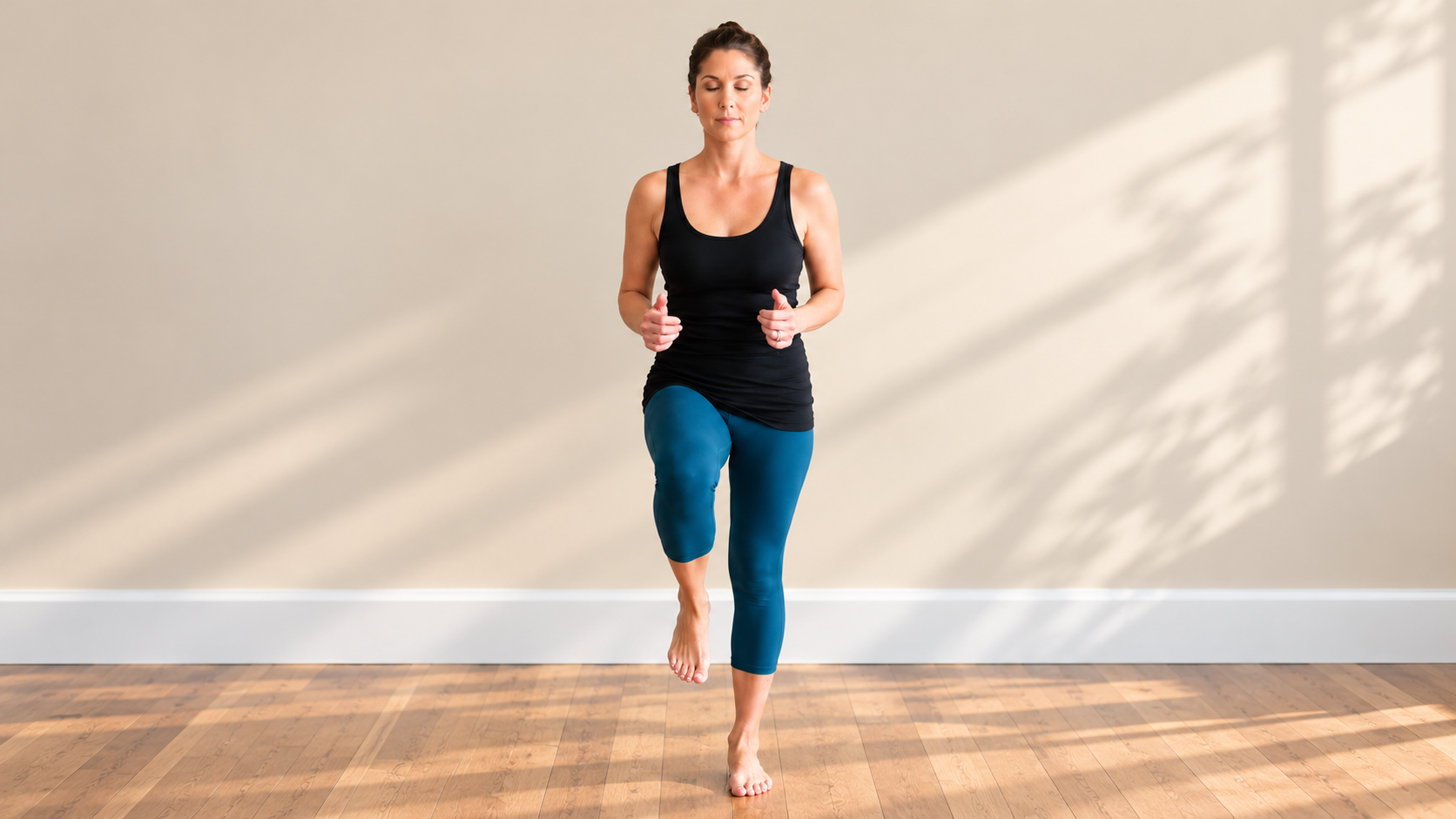
Understand Your Body.
Improve Your Balance.
This workshop combines simple education with practical movement to help you understand what affects your balance and how to strengthen the systems that support it.
The 3 Systems That Control Your Balance
Discover how your visual, vestibular, and proprioceptive systems work together to help you stay steady and respond to movement.
How to Build a Stronger Foundation
Explore exercises designed to develop foot awareness, ankle strength, and the stability needed for controlled movement.
How Strength & Stability Support Balance
Learn why your feet, ankles, hips, and core play an important role in maintaining control and supporting your body’s position.
How to Improve Coordination & Control
Practice movements that challenge weight shifting, single-leg stability, and your body’s ability to make small adjustments as you move.
Why Balance Matters in Everyday Life
Understand the difference between static and dynamic balance and how both contribute to activities like walking, reaching, stepping, and changing directions.
How to Keep Improving
Learn how to incorporate balance exercises into your existing routine and gradually build greater confidence in your movement.
A Simple, Step-by-Step Approach to Better Balance
Work through six self-paced modules that take you from understanding the foundations of balance to practicing exercises that challenge strength, stability, and coordination.
-
Your Starting Point
Get familiar with the workshop, what you’ll learn, and how to approach balance training through intentional movement.
-
Learn What Keeps You Steady
Explore the sensory systems, muscles, and everyday factors that influence your balance, along with why stability matters beyond standing still.
-
Build Stability From the Ground Up
Develop foot awareness and ankle strength through three targeted exercises designed to support your foundation for balance.
-
Develop Strength, Awareness & Control
Practice maintaining stability as your body position changes, with exercises that emphasize weight shifting, single-leg balance, and controlled movement.
-
Put Your Balance Into Motion
Explore exercises that challenge coordination, movement control, and your ability to maintain stability through more dynamic activities.
-
Keep Building Better Balance
Learn how to continue practicing, gradually progress your exercises, and incorporate balance training into your everyday movement routine.
Better Balance Is for Everybody.
You don’t need to be an experienced Pilates student or have a specific fitness background to benefit from understanding your balance.
This Workshop Is for You If…
You sometimes feel unsteady during everyday activities or exercise.
You struggle with single-leg balance or maintaining control during certain movements.
You want to improve your stability, coordination, and body awareness.
You’re interested in Pilates and how it can support better movement.
You’re looking for simple balance exercises to incorporate into your existing routine.
You want to better understand how your body maintains stability and responds to movement.
No Advanced Pilates Experience Required.
This workshop is designed to be approachable for a variety of experience levels, with guidance to help you select exercises and variations that match your abilities.
All you need is a willingness to learn, move intentionally, and build your balance one step at a time.
If you experience frequent falls, unexplained dizziness, or significant balance difficulties, consult a qualified healthcare professional before beginning balance exercises.
Have Questions?
We’ve Got Answers.
-
Not at all! This workshop is designed for anyone interested in understanding and improving their balance. The educational lessons are beginner-friendly, and the exercises include guidance to help you work at an appropriate level.
-
You’ll learn how your sensory systems, muscles, and joints contribute to balance, why stability matters in everyday movement, and how to practice 10 Pilates-inspired exercises that target strength, coordination, and control.
-
The workshop includes exercises with varying levels of difficulty. Many movements can be modified or performed with additional support, allowing you to choose an appropriate starting point and gradually increase the challenge.
-
Some exercises can be performed with little or no equipment, while others use props such as a stability ball, balance trainer, or small ball. You’ll be introduced to the equipment needed for each exercise so you can choose movements based on what you have available.
-
No. This is a photo- and text-based workshop. Each exercise includes photographs and written instructions explaining how to perform the movement, its purpose, and important technique considerations.
-
The workshop is entirely self-paced, so you can move through the educational lessons and exercises at a speed that works for you. You can complete the material in shorter sessions or revisit individual exercises over time.
-
Yes! Your workshop includes a downloadable Exercise & Reference Guide featuring educational visuals and all 10 exercises, making it easy to review instructions and continue practicing.
-
Many of the concepts and exercises can be relevant to adults of different ages. However, the workshop is not a specialized fall-prevention or rehabilitation program. Anyone with a history of falls, significant instability, or medical concerns should seek individualized guidance before participating.
Better Balance Starts With Understanding Your Body.
You don’t need perfect balance to begin improving it.
You just need a better understanding of how your body works and a few practical tools to help you build strength, stability, and control.
Whether your goal is to feel steadier during everyday activities, improve your Pilates practice, or simply move with greater confidence, this workshop offers an approachable place to start.